GPT-5 vs Gemini: strengths by task
From running both every day in GO AI Chat: GPT-5 is the steadier tool for structured writing, instruction-following, and code. Gemini is what you want when the input is large — long documents, transcripts, big context — and for work that touches Google's world. Qualitative on purpose; as of August 2026, and both update frequently.
The one-table version
| Task | Pick | Why |
|---|---|---|
| Structured long-form writing | GPT-5 | Holds the outline you specified to the end |
| Following fiddly instructions | GPT-5 | Respects constraints and "don't touch anything else" |
| Everyday coding | GPT-5 | Higher first-try success in our use |
| Reading a 100-page document | Gemini | Large context is its defining strength |
| Summarising transcripts | Gemini | Handles sprawl without losing the thread |
| Broad general knowledge | Either | Genuinely close; verify either way |
| Careful reasoning, edge cases | GPT-5 | More willing to slow down and hedge honestly |
| Google-shaped work | Gemini | Native fluency with that ecosystem's conventions |
Writing: GPT-5 keeps the shape
Ask for a 1,200-word piece with five named sections, a specific tone, and a hard constraint ("no bullet lists"), and GPT-5 more reliably delivers all four at once. Gemini writes fluently but drifts further from the brief on long outputs — sections merge, the constraint you stated in paragraph one quietly lapses by the end.
The practical consequence isn't quality, it's rework. A draft that ignored your structure costs more to fix than a slightly duller draft that followed it.
Long documents: Gemini, not close
This is the clearest split. Paste a long contract, a research paper, a two-hour transcript, and Gemini stays coherent about the whole thing — cross-referencing section 2 against section 19 without being reminded that section 2 exists. Large context has been Gemini's signature since the beginning and it still shows.
Worth saying plainly: for a document you'll query repeatedly, neither chat model is really the right tool. Pasting the same 80 pages into every conversation is expensive and forgetful. That's what a source-grounded knowledge base is for — see what RAG actually is.
Code: GPT-5 first, Gemini as the reader
For writing and fixing code, GPT-5 wins on first-try correctness in our use, and — the underrated part — on not refactoring things you didn't ask about. Gemini earns its place differently: point it at a large unfamiliar codebase and ask what's going on, and the context advantage pays off. Write with one, orient with the other.
Where the difference is smaller than the discourse
General knowledge, everyday explanation, translation, brainstorming, summarising a single article — these are close enough that model choice is not your bottleneck. Prompt quality moves results more than model choice does across this entire band, and both models are confidently wrong at similar rates on things you didn't verify.
The honest recommendation
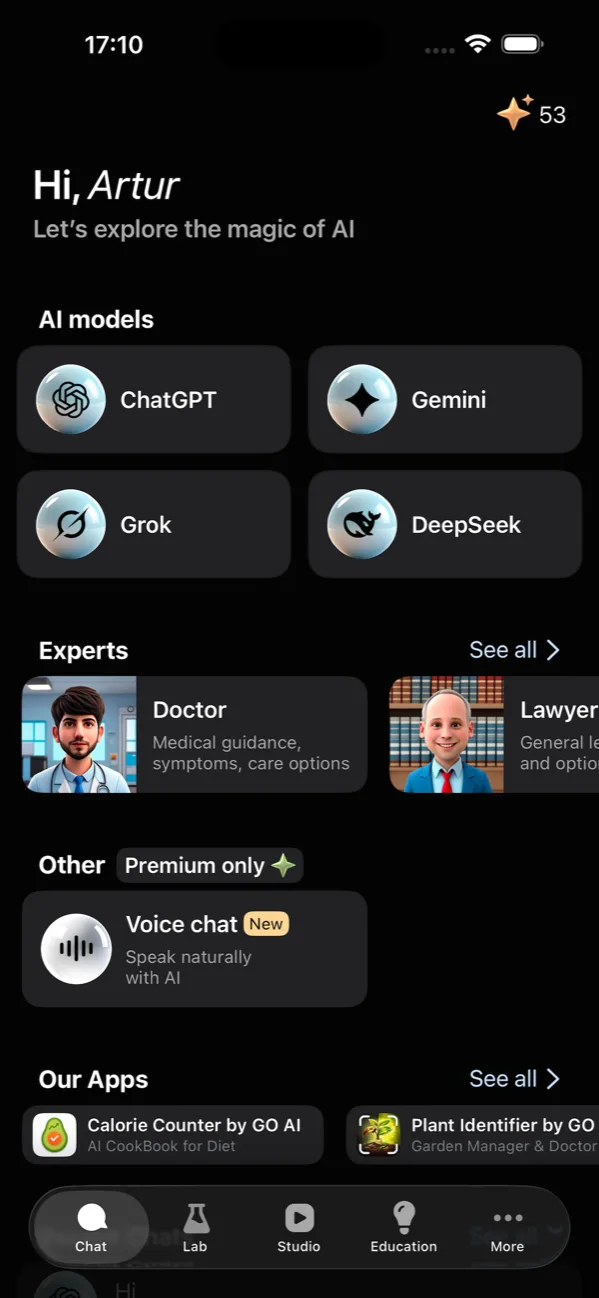
Don't pick. The reason we ship four models in one app is that the right answer changes per message: GPT-5 for the structured draft, Gemini for the document you're drafting about, Grok for what happened this morning. Switching mid-thread costs nothing and beats being loyal to a model that's wrong for the task in front of you.
For the full four-way split, see which AI model for which task. If you're weighing whether one app beats four subscriptions, we did the arithmetic in multi-model apps explained.
FAQ
Is GPT-5 better than Gemini?
Neither is better across the board. GPT-5 is steadier for structured writing, instruction-following, and code; Gemini is the one for large inputs and Google-shaped work.
Which is better for coding?
GPT-5 in our daily use — higher first-try success and better at leaving untouched code untouched. Gemini is useful for orienting in a large unfamiliar codebase.
Which handles long documents better?
Gemini, clearly. Large context is its signature strength.
Do I have to choose one?
No. In GO AI Chat both live in the same app and you switch mid-conversation, so use each for what it's good at.