Calorie deficit, explained like a human
A calorie deficit means your body uses more energy than you feed it, averaged over weeks, so it makes up the difference from its own stores. That's the whole mechanism. The parts that trip people up are the estimating (both sides of the equation are approximations) and the timescale (daily scale weight is mostly water). A deficit of roughly 10–20% below maintenance is the range most adults can actually hold — and holding it is what decides the outcome.
The mechanism, once
Your body spends energy every day: keeping you alive, digesting food, moving you around, and whatever exercise you deliberately do. Feed it less than that total and it covers the gap from stored energy. Feed it more and it stores the surplus. There is no version of this where the arithmetic doesn't apply — but there are many versions where the numbers you believe are wrong, and that's where nearly all the confusion lives.
Both sides of the equation are estimates
This is the honest part that diet advice usually skips.
- What you eat is estimated. Package labels carry a legal tolerance, restaurant portions vary by whoever plated them, and "one tablespoon of olive oil" is rarely one tablespoon.
- What you burn is estimated too. Formulas for basal rate are population averages applied to an individual. Wearables are confident and approximate.
So treat the numbers as a consistent measuring stick, not truth. If your estimate is 10% off but it's off in the same direction every day, it still tells you which way you're going and whether to adjust. That's all you need it to do.
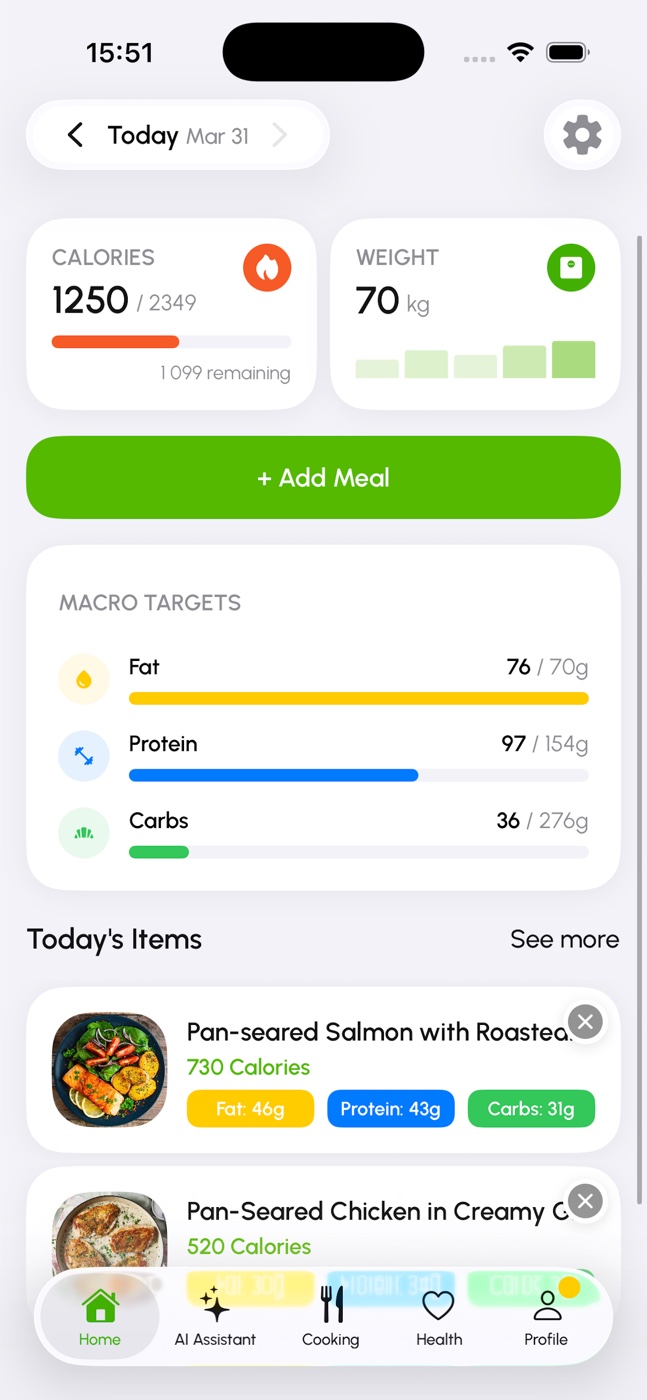
How big should the deficit be?
Bigger is not better, because the constraint isn't arithmetic — it's adherence. A deficit you abandon after eleven days produces no result; a smaller one you keep for four months produces the whole result.
| Deficit size | What it feels like | Honest verdict |
|---|---|---|
| ~10% below maintenance | Barely noticeable | Slow, very sustainable; good if you have time |
| ~15–20% below maintenance | Noticeable but liveable | The range most adults do well in |
| 25%+ below maintenance | Hungry, tired, irritable | Hard to hold; costs muscle and adherence |
| Very low intakes | Miserable | Medical territory — not a self-directed plan |
Protein is the one composition detail worth caring about while in a deficit: it protects muscle and it's the macro that keeps you full. If you change one thing about what you eat rather than how much, make it that.
Why the scale lies
Day-to-day scale weight is dominated by water, glycogen, and what's currently in your digestive system. A salty dinner can add a kilo overnight that has nothing to do with fat. Which is why a single weigh-in is close to meaningless, and why people abandon working plans on day nine.
Weigh often, but read the trend, not the reading. Two weeks is the shortest window that says anything. If the trend line over a fortnight is flat, then you have information worth acting on.
The four reasons a deficit looks stalled
- Intake is higher than logged. Overwhelmingly the most common. Cooking oil, drinks, tastes while cooking, weekends logged loosely. Nobody does this dishonestly — it's just invisible.
- Expenditure is lower than assumed. Formulas and wearables both flatter. Treat the estimate as a starting hypothesis to correct with real-world results.
- Not enough time. See above: water noise swamps two weeks of real change.
- The deficit closed. A lighter body burns less. The target that worked in month one is closer to maintenance by month three — that's a number to recalculate, not a personal failing.
The simplest honest workflow
- Get a rough maintenance estimate from your age, height, and weight.
- Set the target 10–20% below it and give it two weeks without editing.
- Log the same way every day — consistency beats precision.
- Compare fortnight to fortnight. Adjust by a small amount if the trend is flat.
- Recalculate when your weight has moved meaningfully.
If logging by hand is the part that breaks, photographing meals is a lower-friction route to the same information — we cover what that can and can't tell you in can AI count calories from a photo?.
FAQ
What is a calorie deficit?
Eating less energy than your body uses, averaged over weeks. The body covers the shortfall from its own stores.
How big should a calorie deficit be?
Roughly 10–20% below maintenance is a sensible range for most adults. Aggressive deficits cost muscle, energy, and adherence — and adherence decides outcomes.
Why am I not losing weight in a deficit?
Usually intake is higher than logged, expenditure lower than assumed, not enough time has passed, or the deficit closed as you got lighter.
Can I lose weight without counting calories?
Yes — counting is one route to a deficit, not the only one. Portion habits, more protein, or simply photographing meals to see the pattern work for many people.